
Ocean Threats: Codependency and Weirdo Orcas
Plus, more threats: heat waves and religious bullies and a very funny shirt collar
If you’re in a boat in the middle of the Pacific and covid hits, it instantly becomes very difficult to dock anywhere, which is a pretty big problem
And yes, that can make for a story that will end up on a mental health podcast a few years later.
My guest this week on the pod is Angela Harger-Thompson, who has made a documentary and a book about that experience. The doc is Quarantine at Sea, and the book, named after what her furious and perhaps unhinged ex-boyfriend demanded the doc be called, is Worst Tits Ever. That meant saying that phrase out loud for the first time in my life, and into a microphone.

Here’s the bones of the story. Angela moves from Texas to Los Angeles to make it in Hollywood. Quickly gets a job offer to work for an alleged producer who drugs, strangles, and rapes her. An on-again, off-again boyfriend helps her through the aftermath of that ordeal and ends up inviting Angela to join him on a 4000 nautical mile, four-week sea voyage from Panama to the Marquesas Islands (he’s rich). So she goes with him, his dog, and a few crew members on a 47-foot sailboat and everything is mostly okay for a while. But then she finds all these pictures of other women he had been with, some nudes, and he says oh no, they mean nothing to me.
Then covid hits and countries close their borders and those on the boat are out of cell and internet range so reports are sketchy. They reach the Marquesas, the crew splits off for Tahiti, and Angela and the boyfriend sail on their own (with the dog) to Hawaii. Out of fear or out of proximity, they are pretty messed up once they get there. Things get hostile. He accuses her of being part of Q-Anon. They break up. She gets back to the mainland where he unloads on her in an obsessive deluge of messages.
Now, we only get Angela’s side of this story, of course. She won’t even name the boyfriend in the interview (she does in the book). But what really emerged for me in this interview was codependency. I can’t speak for him but for her, she had been through trauma and placed all her safety, all her coping, all her healing, her nourishment, and her career in the hands of someone else. The way she tells it, things got steadily worse over the course of the sea voyage and while a lot of that has to do with the pandemic and the loss of crew, I think it’s also about the steady amplification of a toxic relationship.
When she left Hawaii and this guy, she healed and she could put it in the perspective of a thing that happened to her and not a thing that she was.
Are we pathologizing everyday life as mental illness?
Dr. Clay Routledge thinks maybe so and wrote about it in the New York Times. He points to a “concept creep” where we have greater awareness of mental health than ever before but also more people reporting problems than ever before. He asks, or kind of says, that the two are related.
But the problem isn’t just that many people give themselves incorrect diagnoses. It’s also that these misperceptions can put people on the path to developing poor mental health — a kind of self-fulfilling prophecy. When people in one study were encouraged to adopt a broad view of what constitutes trauma, they reported greater levels of distress after watching a film clip with disturbing content and were more likely to describe the experience as personally traumatic.
Or consider anxiety. A certain amount is useful; it helps keep us alert and motivated to reach our goals. But start viewing anxiety as a disorder and you can become hypervigilant about avoiding anxiety-provoking situations — which, in turn, can increase the risk of developing an actual anxiety disorder.
I’m more sympathetic to the argument than I expected to be, especially because it’s easy to read it as a sort of New York Times level of saying “Oh calm down”, a statement that has never calmed anyone down. But - purely anecdotally - I do bristle at the idea of a mental health condition being a get-out-of-life free card, waving a diagnosis and not participating in the day to day.
Still, I guess my big evolution has been away from the idea that some people have mental health problems and others don’t. It’s an issue for everyone. And a term for what you have can oversimplify your complicated mind and make you miss out on the bigger picture. My therapist told me once that diagnostic terms exist in large part for insurance purposes. You are declared to “have depression” and you can get coverage where if you “are depressed” you might not.
I think we just have minds and if you carry anything around your whole life and use it constantly, there’s going to be wear and tear, damage and hopefully repair. I think the answer is not to condemn people for identifying an issue, it’s recognizing the whole mind and helping each other bring those minds through the world.
People subjected to religious abuse of higher rates of depression and anxiety
Religion is a comfort for a lot of people and those with a strong sense of belonging to a church report lowers levels of depression and anxiety. But when the church is leveraged to abuse parishioners, the damage is significant, according to new research.
The respondents who endured religion-justified abuse showed the highest levels of adult distress across the board. Their scores for anxiety, depression, stress, and anger were substantially higher than those of individuals who experienced similar abuse in purely secular settings. Both abuse groups displayed worse mental health outcomes than the group with no abuse history.
The gap between the two abuse categories was especially wide when looking at anxiety symptoms. The odds of a participant having extreme anxiety as an adult were roughly four times higher if their early physical or sexual abuse featured religious justification. The researchers noted that this represents an enormous increase in psychological risk over standard forms of maltreatment.
Heat waves and anxiety
Are they really heat waves when it’s just how things are all the time?
The BBC has an article about how anxiety spikes in the heat, informed by climate change anxiety.
“Anticipatory anxiety”, related to heatwaves in particular, has become more common, say psychologists Dr Caroline Hickman from the University of Bath and Dr Emma Lawrance from the University of Oxford.
“Once people have been through a traumatic event like a flood or a heatwave, they anticipate the next one,” Hickman, who offers therapy to individuals experiencing climate anxiety, told the BBC.
In the UK, “now we’re getting the repeat, repeat, repeat [heatwaves]. It triggers that sense that ‘I can’t be safe in the world, and the world can’t be trusted’,” she added.
In June’s heatwave, Hickman said she “had people saying they’re going to kill themselves, I’ve had people saying they’re going to terminate pregnancies, I’ve had people saying that they want to sell their houses and move somewhere cooler”.
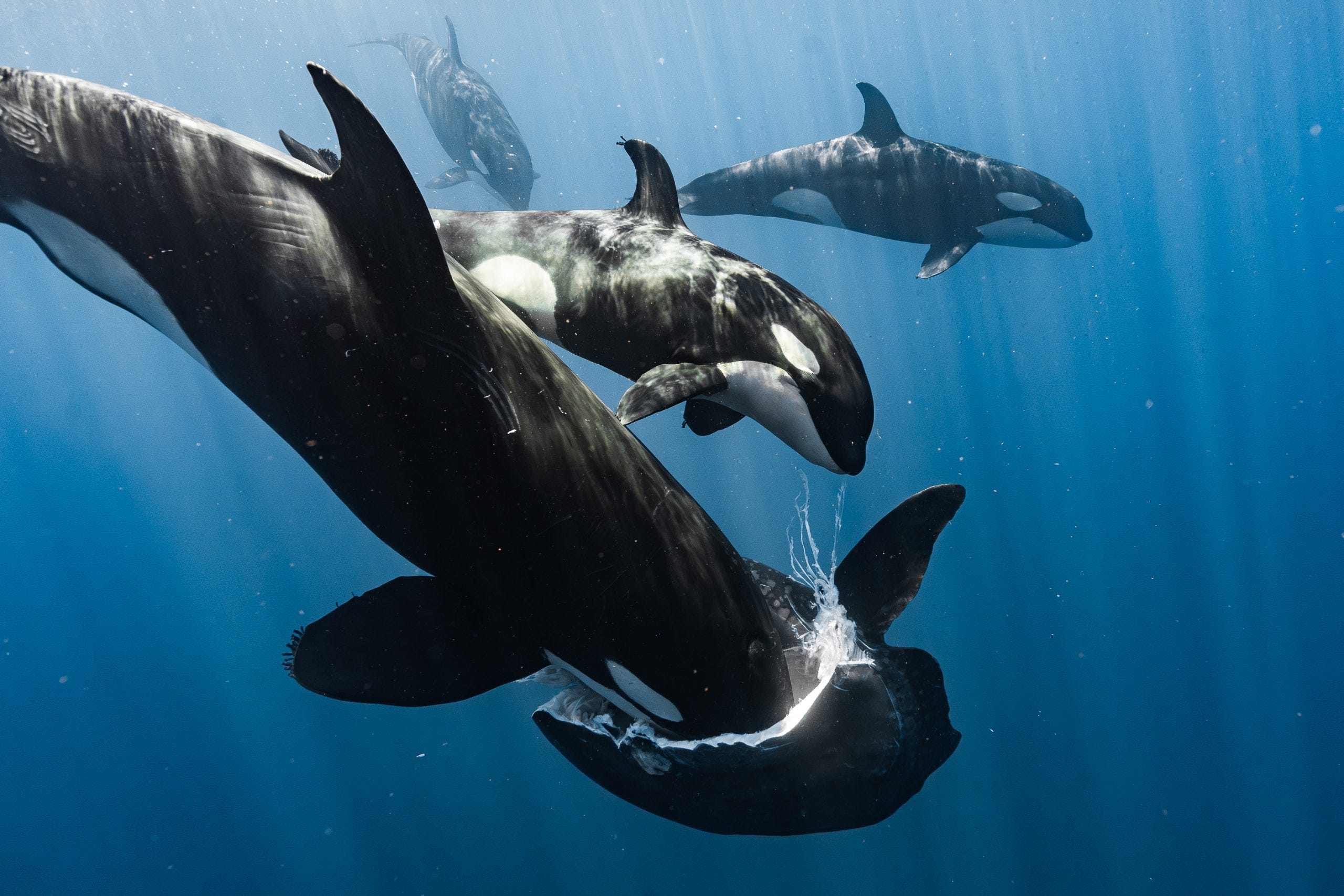
Orcas seem to be ramming fish so hard they explode. The fish explode. Not the orcas.
What?
On several occasions, orcas were observed to hold sunfish in their jaws while a second whale smashed into the target at high speed, causing it to break into thousands of pieces. Since the fish had already been killed, scientists suggested the behaviour may represent a form of play.
Dr Kathryn Ayres, a scientist at non-profit organisation Beneath The Waves, said: “We think this may help younger orcas feed more easily or it could also just be for fun. Orcas are known for playing with their food.”

Jesse Thorn on Sleeping with Celebrities
The Max Fun founder joins us for a discussion of escalating menswear formality.
Maximum Fun, the network upon which you hear our program, was founded by one Jesse Thorn, who continues to host an improbable number of podcasts on the network. Three, in fact: Bullseye (an interview program with cultural figures, also on NPR), Jordan, Jesse, Go! (where he horses around with Jordan Morris), and Judge John Hodgman (where he is the bailiff to the titular judge. But Jesse’s interests expand yet further, all the way to men’s apparel, how it has evolved, and what you should, in fact, wear. Maybe a grey or blue suit is a better all-purpose option than black. Maybe a vintage t-shirt is okay once in a while. We even examine and judge by-gone fashions, including the dog-eared collar, which you can see in this episode’s tile and which will haunt our collective dreams forever. Maybe you’ll be asleep before you hear about that collar. We hope so.

i love the podcast, but this guest got on my nerves